


Wallpaper Symbols

reading time
Wallpaper symbols are a mystery to most people. At the same time, it’s important to understand how to interpret them. On every roll of wallpaper, you’ll find one or more wallpaper symbols—but what do they mean? The symbols on the wallpaper roll’s label describe the wallpaper’s characteristics and how it should be hung.
Let's go over:
Pattern Fitting – How to Do It Right
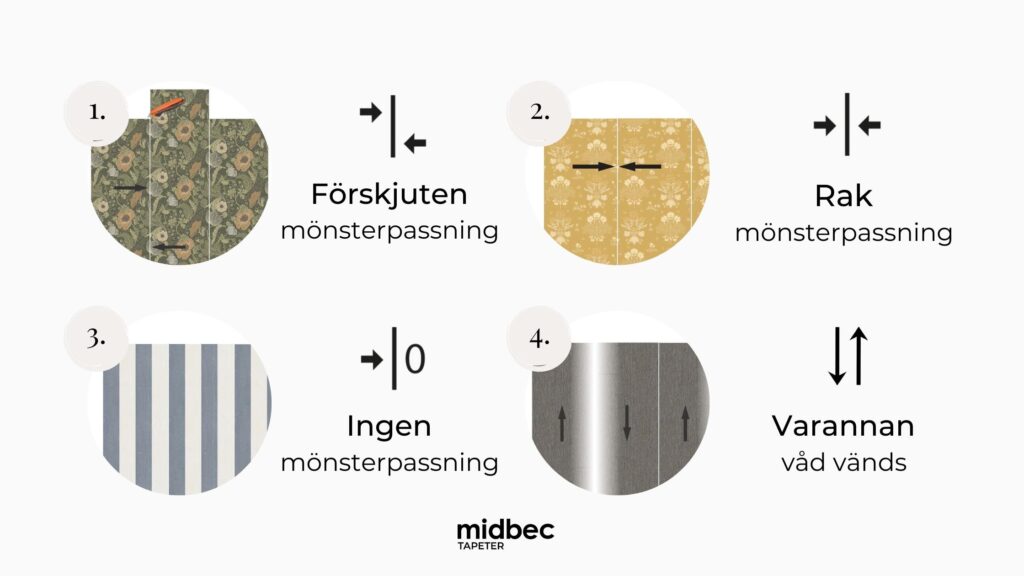

Offset Pattern Matching
Offset pattern matching means you need to shift the strip to align the pattern (see the red knife in Figure 1). So you need to push the wallpaper up (or down) until you see that the pattern lines up. That way, the pattern will align all the way. It’s easier than it sounds!

Straight Pattern Matching
The pattern matches across the entire width of the wallpaper; the same pattern repeats at regular intervals. The wallpaper roll indicates how often the pattern repeats—for example, 53 cm. Each strip must line up with the previous one in exactly the right position.
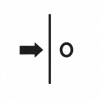
No pattern matching
Free placement—you arrange the strips without following any particular pattern.
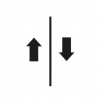
Was turned upside down
Offset pattern matching means you need to shift the strip to align the pattern (see the red knife in Figure 1). So you need to push the wallpaper up (or down) until you see that the pattern lines up. That way, the pattern will align all the way. It’s easier than it sounds!
What is a pattern fitting?
Pattern matching is the process of aligning the strips with each other so that the pattern lines up. A wallpaper pattern is always a repeating pattern—that is, the pattern repeats along the entire length of the roll. So when designing a wallpaper pattern, it’s common to draw in 53 cm x 53 cm sections. So for a wall that is 2.50 high, the same pattern will repeat nearly 5 times.
Part of a designer’s job is to make the wallpaper pattern look as natural as possible on the wall. This means trying to hide the repetition, which can be achieved by using various offsets in the pattern.
Washable wallpaper
Wipeable
This symbol indicates that the wallpaper can be gently wiped with a natural sponge at the time of installation (do not scrub).

Washable
The wallpaper can be gently cleaned (do not scrub) with a damp cellulose sponge.

High washability
This symbol indicates that the wallpaper is durable enough to withstand thorough cleaning without being damaged. Use a natural sponge and soapy water.

Washable with a brush
These are the most durable wallpapers. If you need heavy-duty wall coverings, this is your best choice. Use a soft brush and soapy water.
Setup Instructions

Glue directly onto the wall
Hang the wallpaper edge to edge.

Apply the adhesive to the wallpaper strip
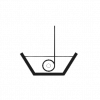
Pre-pasted wallpaper
"Pre-pasted" or "pre-glued" is not the same as self-adhesive wallpaper.
Lightfastness
Lightfastness symbols indicate the wallpaper's resistance to fading when exposed to light.

Lightfast
This symbol indicates that the wallpaper's colors may be slightly affected by exposure to sunlight.

Good lightfastness
The wallpaper can withstand strong sunlight.

Excellent lightfastness
The wallpaper is highly resistant to strong sunlight.
Remove wallpaper
The wallpaper symbols below explain the best way to remove the wallpaper from the wall.

Remove damp
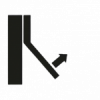
Deductible
Can be removed when the walls are repapered in the future.
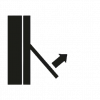
Peel-and-stick wallpaper
The surface layer (top layer) of the wallpaper can be peeled off.
Adhesive Symbols for Wallpaper
Nonwoven adhesive
Fabric adhesive with > 20% dry matter content
Can be removed when the walls are repapered in the future.
Vävlim med < 20% torrhalt
The surface layer (top layer) of the wallpaper can be peeled off.
STB code
Adhesive manufacturers label their products with what is known as an STB code to provide guidance on selecting the appropriate adhesive for different types of wallpaper.
There's more to discover…
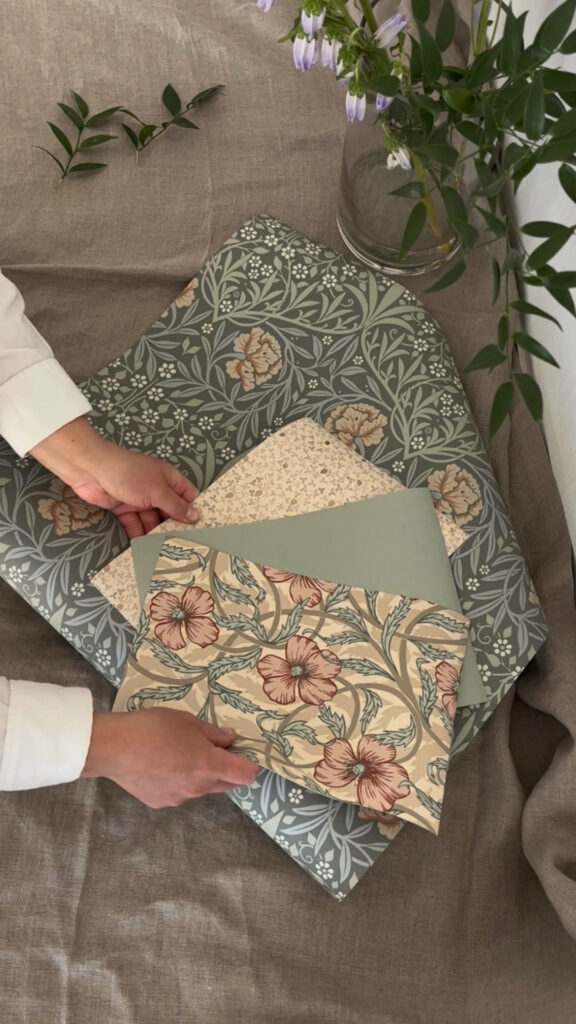


The latest inwalltreatments for those who want more.